Plaster vs. Drywall: Which Walls Are Right for Your Home?
If you're planning a renovation or building a home from scratch, one of the first decisions you'll face is what goes beneath that fresh coat of paint.
The choice of plaster vs. drywall might not be as exciting as picking colors, but the material you choose will shape how your home looks, sounds and holds up over time.
Each has its own strengths, costs and installation requirements, and the right choice relies on factors like your budget, your timeline and how you need your home to work for your family.
What Is Plaster?
Plaster is a traditional building material used on walls and ceilings that hardens into a dense, durable surface as it dries.
Known for its solid feel and timeless appearance, plaster gives homes a classic, seamless elegance and is commonly found in many older homes.
Materials and Application Process
Plaster is made by mixing gypsum, lime or cement with water to form a thick paste. It’s applied by hand in multiple layers over a base like wood or metal lath or directly onto masonry surfaces.
The first coat builds thickness and grip, while additional coats smooth and refine the surface. As each layer dries, it hardens into a dense, solid finish that’s extremely durable.
Common Uses in Older Homes
Plaster walls and ceilings are very common in older homes and were preferred by builders for their strength, fire resistance and ability to form curves and detailed moldings.
Before drywall became widely used in the mid-20th century, plaster was the standard wall material because it created durable, solid walls that also helped reduce sound transfer between rooms.
Applied over wood lath framing, plaster added strength and improved resistance to the elements, which was an important advantage before central heating and air conditioning.
Many older homes still have their original plaster walls intact today, along with the decorative ceilings and moldings that made plaster such a popular choice.
What Is Drywall?
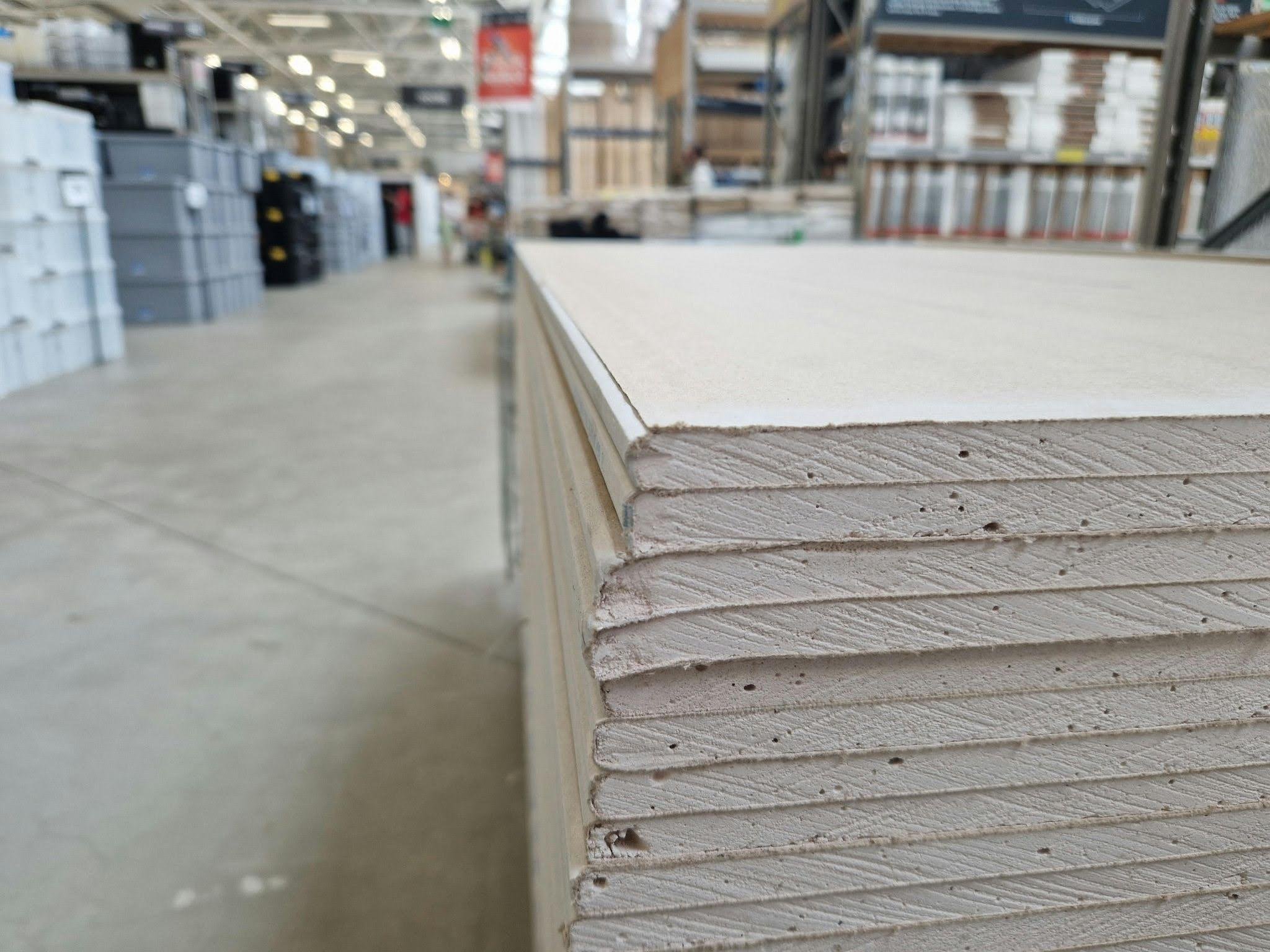
Developed in the mid-20th century to make construction more efficient, drywall is a wall and ceiling material made from a solid gypsum core pressed between two layers of paper.
It comes in large sheets that can be cut to any size, nailed to the wall framing and sealed with tape and joint compound to create a smooth finished wall.
Materials and Manufacturing
The gypsum in drywall is first ground into a fine powder and mixed with water and additives to give it strength and fire resistance. This mixture is then spread between two layers of durable paper, forming a flat panel. The resulting drywall sheets are lightweight and easy to handle, ship and install.
Common Uses in Modern Construction
Drywall is now the standard material for finishing interior walls and ceilings in both residential and commercial spaces because it is versatile, affordable and quick to install.
Different types are designed for specific uses, including moisture-resistant drywall for bathrooms and kitchens and fire-rated panels for garages and shared walls.
Plaster vs. Drywall: A Comparison

Both plaster and drywall create a smooth, paintable surface and have similar properties. So, which is right for your home? To make the right choice, you also need to consider these factors:
Cost and Installation Time
When it comes to cost, drywall is typically less expensive than plaster, and because it comes in large, ready-to-install sheets, labor costs are also lower.
Drywall installation can often be completed in a matter of days, which helps keep overall expenses down. For homeowners or contractors who have a tight timeline or budget, drywall is an affordable and sound choice.
Plaster is more expensive because it requires more materials, labor and skilled craftsmanship, with multiple layers applied to create a strong, durable finish. Each coat also needs time to dry before the next is added, which can extend the overall project timeline.
However, even though the upfront cost is higher, many homeowners see plaster as a long-term investment for its strength, longevity and high-end appearance.
Durability and Longevity
For most applications, plaster is considered to be more durable than drywall. Once it cures, it forms a hard, dense surface that holds up well to daily use. It’s less prone to dents and minor damage, making it a good fit for high-traffic areas. Plaster also holds up well over time, often lasting decades without needing major repairs.
Drywall is durable, but it’s softer and more vulnerable to dings, holes and moisture damage. However, drywall repairs are much easier to handle compared to plaster repairs. Small dents or cracks in drywall can often be patched quickly without specialized skills, whereas plaster repairs require a skilled craftsman, which can be expensive.
Soundproofing and Insulation
If soundproofing is a priority, plaster is the better choice. Its density makes it more effective at blocking and dampening noise between rooms, a key reason older homes with plaster walls tend to feel so quiet.
Plaster also offers slightly better thermal insulation than drywall, slowing heat transfer and helping keep indoor temperatures stable for improved energy efficiency.
Drywall doesn't match plaster's soundproofing ability on its own, but insulation can be double-layered inside the wall cavities during installation to improve both temperature regulation and sound control.
Maintenance and Repair Considerations
Even in the best-kept homes, wall and ceiling damage are bound to happen. The ease of maintenance and repair should always be considered when you’re choosing between plaster and drywall.
Repairing Cracks and Damage
Minor dents, nail holes or hairline cracks in drywall can usually be fixed with joint compound, a bit of sanding and a fresh coat of paint. The materials needed are inexpensive, and there are no special skills required. If you’re an experienced DIYer and want to minimize future repair costs, drywall might be the best choice.
Plaster repairs are trickier, and damaged sections may need to be replaced entirely by a specialist. Matching the original texture can also be especially tricky in older homes.
Long-Term Upkeep
Both plaster and drywall require some ongoing upkeep beyond occasional repairs. Plaster should be inspected periodically for hairline cracks, and prolonged moisture exposure can cause it to soften, bubble or separate from the lath behind it.
Drywall is also vulnerable to water intrusion, which can cause swelling and mold, and fasteners can pop over time as a home settles.
Repainting is the most common maintenance task for both materials. For drywall, it's also worth noting that bathrooms and kitchens may need moisture-resistant board if the original installation didn't use the right type.
Which Wall Type Is Best for Your Home?
Both plaster and drywall have significant benefits for new homes and renovations. The right fit for your home ultimately depends on the look you’re going for, your budget and if you’re comfortable doing minor repairs yourself.
Budget and Renovation Goals
If budget is your biggest concern, drywall is the best choice. It's inexpensive, easily accessible and has significantly lower installation costs than plaster. Most drywall installation is straightforward enough that some homeowners are comfortable tackling smaller projects themselves, which can further reduce costs.
Plaster is a larger upfront investment. The materials cost more, and installation requires skilled labor, which isn't as easy to find as it once was. That said, if you're looking for a classic, high-end finish, plaster may be worth the higher upfront cost. Its durability also means fewer repairs and replacements over time, which can offset some of the initial expense.
Home Age and Structure
In older homes, especially those built before the 1950s, plaster is often part of the original construction, so keeping or restoring it can help avoid compatibility issues with existing materials. It also works well with the irregular framing common in older homes because the layered application can accommodate uneven or non-standard surfaces.
In newer homes or modern renovations, drywall is usually the better choice. Today's framing methods are designed with drywall in mind, making installation faster and more efficient. It also works well with standard stud spacing and allows easier access to wiring and plumbing when future updates are required.
Find The Right Drywall Solutions For Your Home
Choosing between plaster and drywall depends on what matters most to you. If you're working with a tighter budget or building a new home, drywall is the practical, cost-effective choice. If you're restoring an older home or want a finish with lasting character and superior soundproofing, plaster is worth the investment.
Whether you're tackling a full renovation or a single room, having the right materials can save you time, money and headaches down the road. Page Lumber's drywall solutions make it easy to find everything you need to get the job done.
Contact us today to get started.
